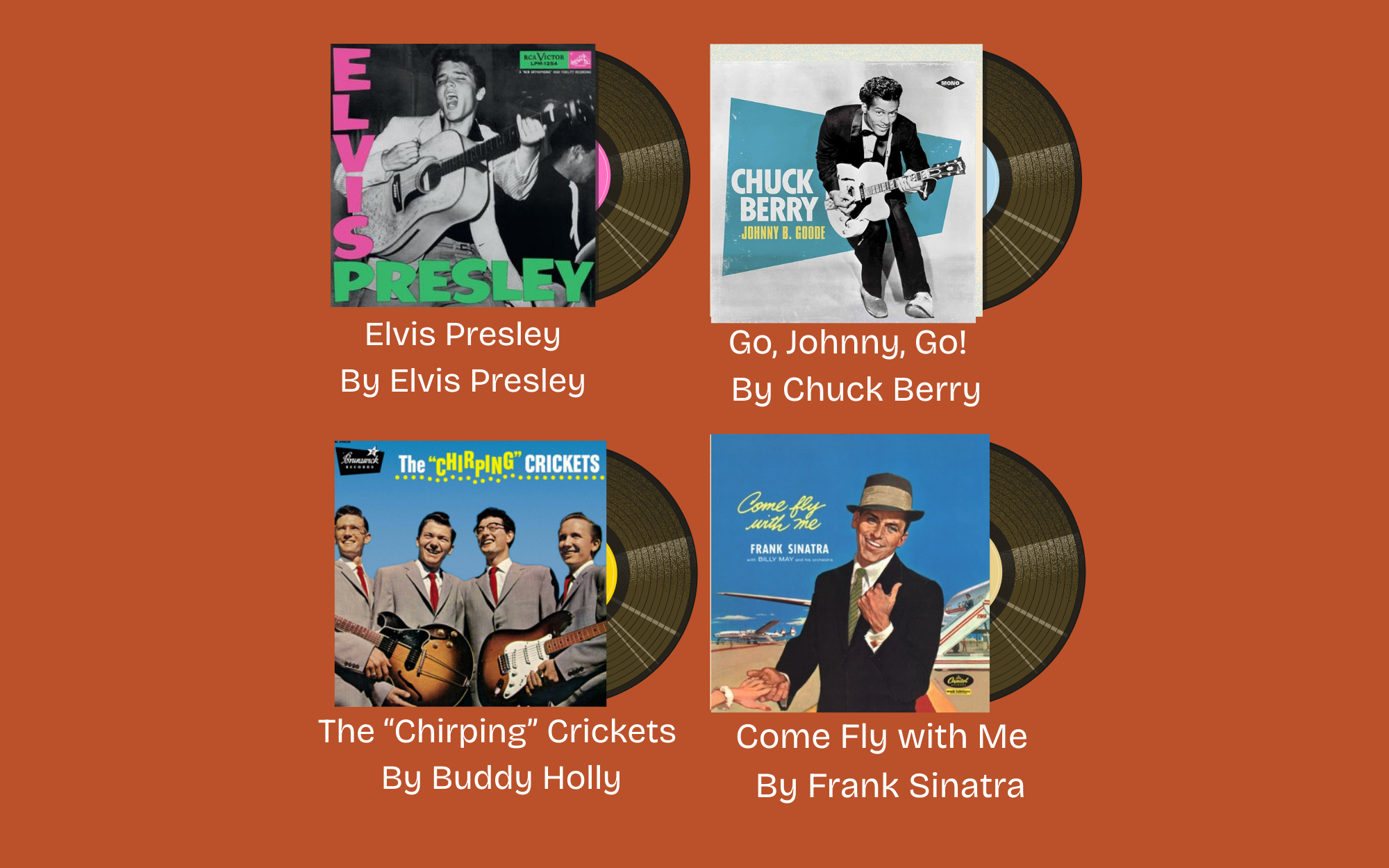

The 1950s was a revolutionary decade for music that introduced the world to rock and roll. From the emergence of iconic artists such as Elvis Presley, Frank Sinatra, Chuck Berry, and Buddy Holly, the importance of 50s music is often overlooked.
Easily the most significant change in music in the 50s is the birth of rock and roll. This genre evolved from a blend of multiple iconic music genres such as blues, R&B, gospel, and country.
Many artists contributed to the development of rock and roll, although many people consider Chuck Berry as the “father of rock and roll” for his musical innovation and influential songwriting.
“I always tell people Chuck Berry created rock and roll,” Ms. Janell Ostrander, the Administrative Secretary of Achievement, said. “That can make some people mad, though.”
Berry redefined how the guitar sounded, making guitar solos a key part of rock and roll. His playing directly influenced artists for decades, including some of the most iconic artists like The Beatles, The Rolling Stones, Jimi Hendrix, and many more.
One thing rock and roll did that shocked the world at its time was breaking down racial barriers through the integration of black and white musical styles. Rock and roll was able to create a unifying culture that brought teenagers from all backgrounds together through their shared love of music. People began to feel united through music, which was something the world had never seen before.
“You also saw the rise of girl groups like The Chordettes, which is really big,” Assistant Principal of Achievement Ms. Alyssa Castro said.
This new era of music appealed to young people, and by the end of the 1950s, rock and roll had taken over the world. As it charged into the 60s, it left a legacy that continues to inspire artists today.

The 1960s were known as an era of political and social change. The 60s included the peak of the Civil Rights Movement, the Vietnam War, and the assassinations of key political figures like President John F. Kennedy and Martin Luther King Jr. These historical events all had an impact on the musical culture of the time.
“There was a whole lot of music being used as a form of protest back then. In fact, that’s kinda what sets the 60s apart from the 50s, is the 60s is when you start to see a lot of protest music,” Honors and AP biology teacher Mr. Michael Griffone said.
Folk music is most known for being a voice for political and social change by protesting the issues during this time. Its lyrics, which usually tell a story, were key for artists like Bob Dylan, Joni Mitchell, and Joan Baez. For example, Dylan’s song “Blowin’ in the Wind” protested war, oppression, and social injustice.
Motown music also served a political and social purpose. It first started as a record label by Berry Gordy Jr., who wanted to take Black music mainstream. The songs had a mix of soul, R&B, and pop. Famous artists such as The Temptations, who wrote “My Girl,” represent this genre.
Soul had more of an emotional tone with popular artists such as Ray Charles and Aretha Franklin. Soul highlighted the Civil Rights Movement, which peaked during the 1960s. It gave inspiration to funk music and then later hip hop. This genre not only affected the states but it shaped global music trends.
“I think what a lot of people don’t talk about from the 60s and you know I would love for people to talk about more is the first wave ska music from Jamaica,” Griffone said. “Jamaicans were doing some really cool reggae and ska stuff back in the 60s that was really, really neat, and it’s kinda fun to listen to that.”
This genre blended Mento, which was a style of Jamaican folk music, American jazz, R&B, and rock and roll. This included bands such as Toots & the Maytals and artists such as Desmond Dekker.
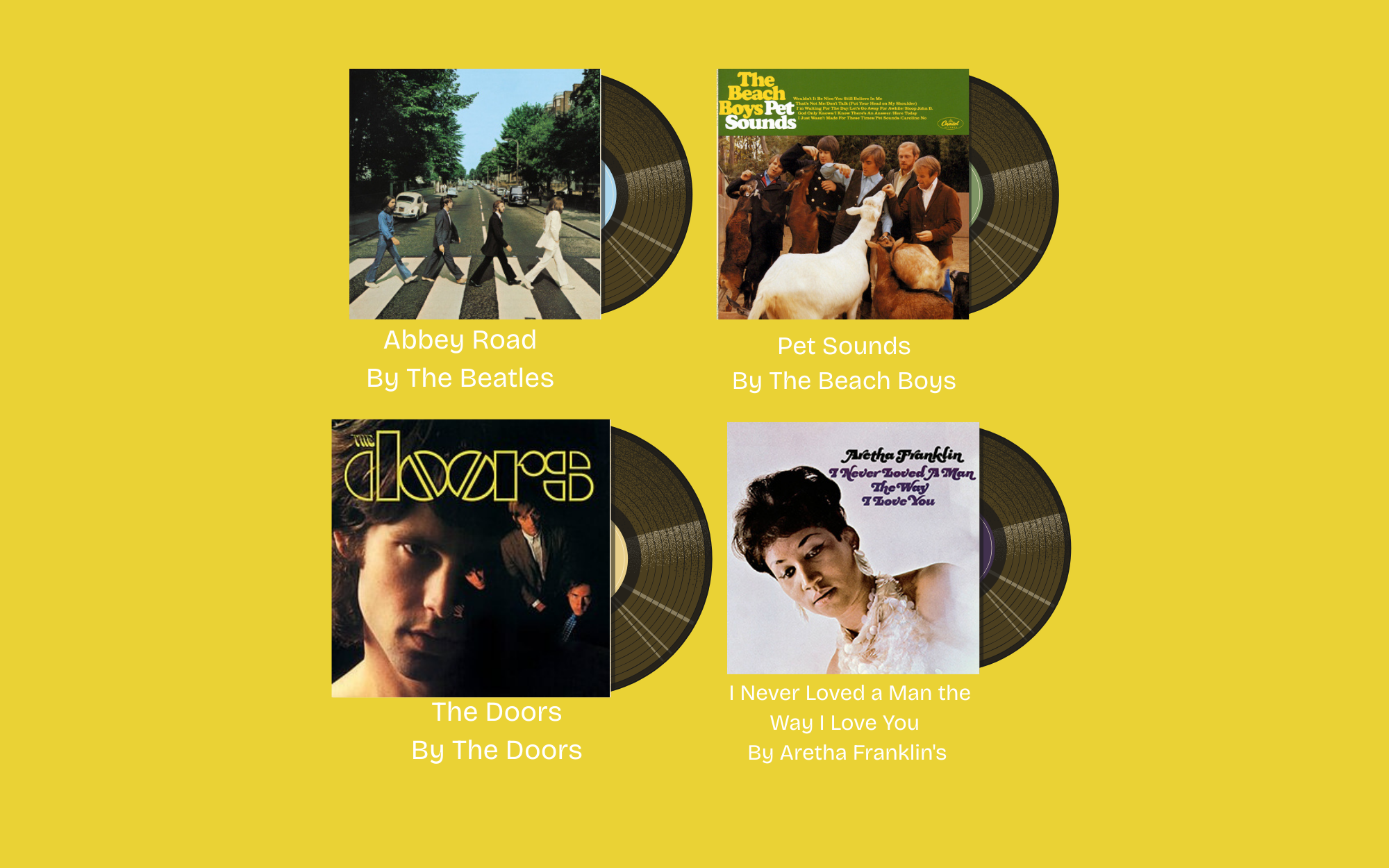
Artists such as The Beatles and The Rolling Stones rose to popularity because of their high energy and electric guitars. This genre was known as the British Invasion; they were popular with the younger generation, most notably leading to “Beatlemania” from 1963-1966.
Music was being heavily experimented on during the 60s, surf rock and psychedelic rock demonstrate this. Surf rock was best known for being almost entirely instrumental. The Beach Boys, who were popular for surf rock, released “Pet Sounds” in 1966. This album showed the band’s experimentation, reflecting the change of the 60s.
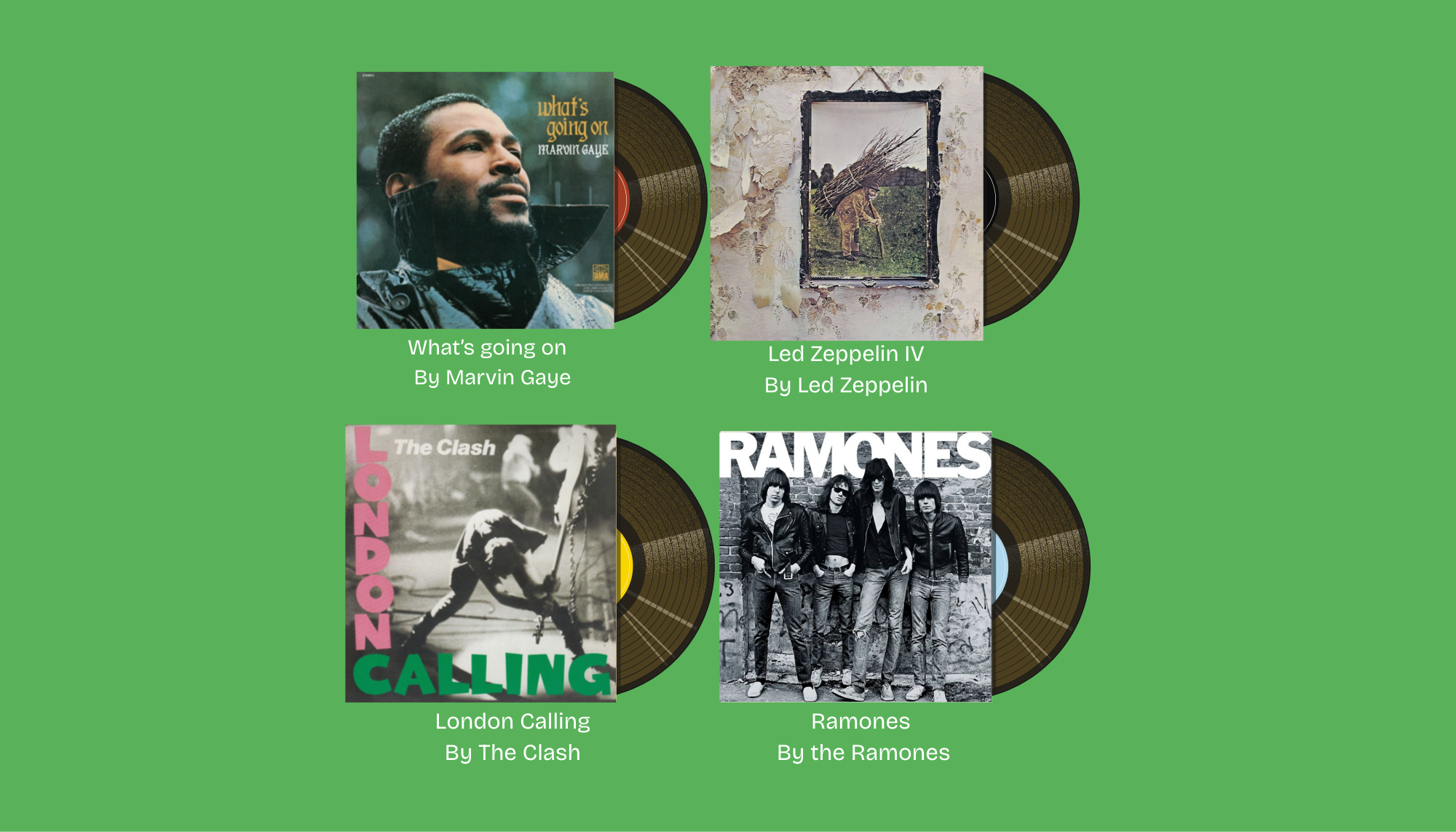
The 1970s were a decade that included diverse sounds that allowed artists to try new and rebellious styles like punk and new wave. Rock also turned more progressive and included new mainstream genres such as disco.
The 70s saw the rise of bands, instead of solo careers, due to record labels taking risks and experimenting with new sounds. This encouraged groups to experiment, something hard to do solo.
Genres like punk and new wave were trying to change from mainstream rock and disco. Artists like The Clash were known for their album “London Calling,” which was produced in 1979, and The Sex Pistols’ “Never Mind the Bollocks” in 1977, both heavily influenced this new genre by rebelling against the norm.
While rock music didn’t have as much rebellion as punk, it was still becoming more progressive in the 70s. Bands such as Pink Floyd criticized societal expectations. Similarly, artists such as Bob Marley and David Bowie tested social expectations by uniquely influencing fashion and identity around the world.
“I think it’s interesting because some of the sounds of the music today at times sound similar to what was in the 70s. Sometimes you can hear the same rhythm or beats in the background or incorporated, even in the background,” Mr. James Longo, sociology and AP government teacher, said.
Bands like Black Sabbath and Led Zeppelin also led the way to hard rock and metal music. “Paranoid” by Black Sabbath, which was released in 1970, had intense sounds, loud guitars, and lyrics that criticized war and politics, specifically shown in their song “War Pigs/Luke’s Wall” released in 1970.
Longo specifically likes 70s music because it tells a story in their songs. Shown in artists like Led Zeppelin or songs like “Cats in the Cradle” by Harry Chapin.
“I wish more music today would tell stories, instead of a moment like today’s music. Like Cat Stevens, how he tells stories. The music always tells stories, and I like listening to the stories that were formed,” Longo said.
Disco became very mainstream in the 1970s and was mainly used for club hits. To this day, we can see disco’s influence on pop and electronic music. Popular songs like “September” by Earth, Wind, & Fire and “Stayin’ Alive” by Gloria Gaynor showed how disco music reflected the funk and fashion during the 70s.

The 1980s marked a vibrant and revolutionary era in music that shaped the musical scene of its time, and continues to echo through the sounds of modern artists today.
From the first commercial release of the CD player in 1983 in the U.S. to the use of synthesizers and electronic instruments, notably the biggest change in music at the time was the rise of MTV. MTV, an American cable television network, revolutionized the music industry by being the first platform to broadcast music videos 24/7. This made music consumption easier to the general public, and music videos became a central part of the industry. MTV underlined the importance of music’s visual appeal.
“I watch music videos, but they aren’t super big today because they had MTV back then,” junior Mia Alcala said. “My dad was in the army and had a TV, and that was always on, and now it’s just not the same. I wish we still had that.”
Music from the 80s has a very different sound than that of other decades, primarily the use of synthesizers and other electronic instruments. Synth-pop gained widespread popularity throughout the 80s with bands such as Depeche Mode, Duran Duran, A-ha, and Pet Shop Boys, who are considered the pioneers of synth-pop.
“It was unique because nowadays it’s all the same and they just reuse old stuff and sample stuff from the 80s,” junior Joseph Copper said. “They just had the heart and soul back then.”
The weight of 80s music is significant in music today. It left a lasting mark on the world and a legacy that persists to this day in artists such as Dua Lipa, The Weeknd, Harry Styles, and more.
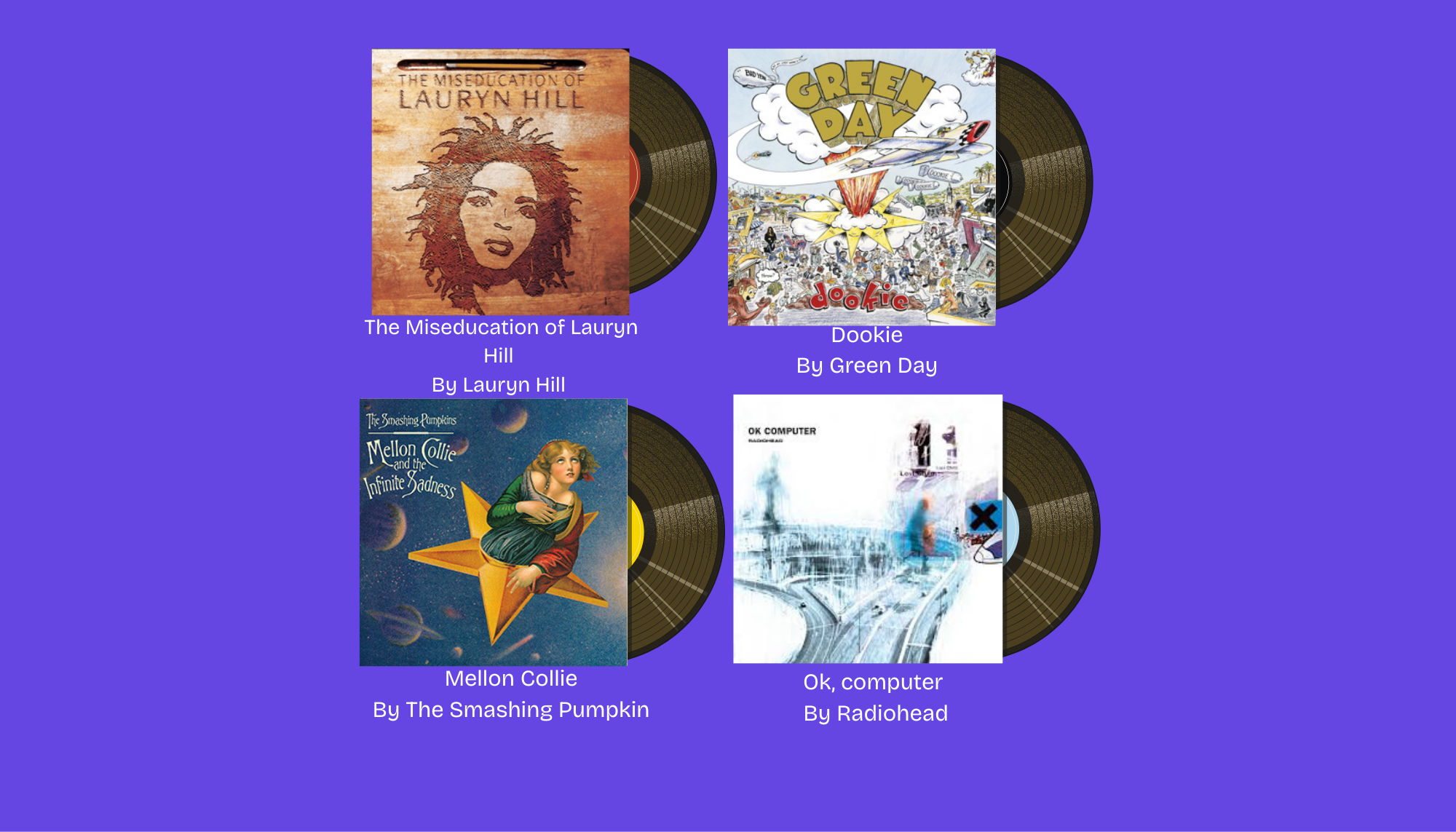

The ‘90s were a time defined by cultural rebellion, technological growth, and a youth influence in media. The ‘90s captured the diverse emotions of a generation split between old-school and the new digital age. Music channels like MTV and BET made visuals just as important as the music itself. Iconic videos like Nirvana’s “Smells Like Teen Spirit,” Britney Spears’ “…Baby One More Time,” and Tupac’s “California Love” shaped the decade’s style.
Black culture didn’t just influence the 90s; it was the 90s. Hip-hop and R&B carried voices with lyrics that were emotional and political, reflecting life rather than just music.
Artists like Tupac Shakur, The Notorious B.I.G., Ice Cube, Lauryn Hill, and Aaliyah used storytelling in music to show the reality of life, while also influencing pop culture, fashion, and social trends.
Beyond hip-hop and R&B, rock and alternative music left a lasting imprint. From grunge to pop-punk to indie, bands like Nirvana, No Doubt, the Smashing Pumpkins, the Cranberries, and the Goo Goo Dolls offered a raw, authentic sound that still inspires artists today. Pop music also dominated the charts, with teen icons like Britney Spears, NSYNC, Backstreet Boys, and Spice Girls creating catchy, influential hits that shaped teen culture.
Senior Audrianna Robles shared her love for 90s music. Her favorite bands include Nirvana and Smashing Pumpkins.
“By far ‘Come as You Are’ by Nirvana is my favorite. I listened to it a lot and just Nirvana in general with my dad growing up,” Robles said.
She explained what sets 90s music apart.
“I feel like music back then included a lot more instrumental components that the singer would also know how to play. Now the singers only really know how to sing music, not play the instruments in their songs. There are some exceptions like Taylor Swift, but most artists don’t do that,” Robles said.
Junior Sahasra Kolluru said their favorite song is “Don’t Look Back in Anger” by Oasis, with Red Radiohead as their favorite band.
“I think music is really different just because the style has evolved over the decades and nothing stays the same, but also there’s been a major trendification of. A lot of popular music nowadays, and while you can still find the emotional songs nowadays, a lot of music has been made to fit short-form content,” Kolluru said.
The ‘90s weren’t just about style or hits. It was also about authentic voices, especially from Black artists who defined hip-hop and R&B while shaping culture at large. Lauryn Hill, TLC, Missy Elliott, OutKast, 2Pac, and Aaliyah created sounds beyond music and influenced fashion, attitude, and social trends.
This decade also leaves a heavy legacy in alternative indie and rock music. From grunge to pop punk to whimsical indie music. Today, the nostalgia for 90s music is alive in vinyl collections, curated playlists, and artists who draw inspiration from the decade’s raw authenticity.
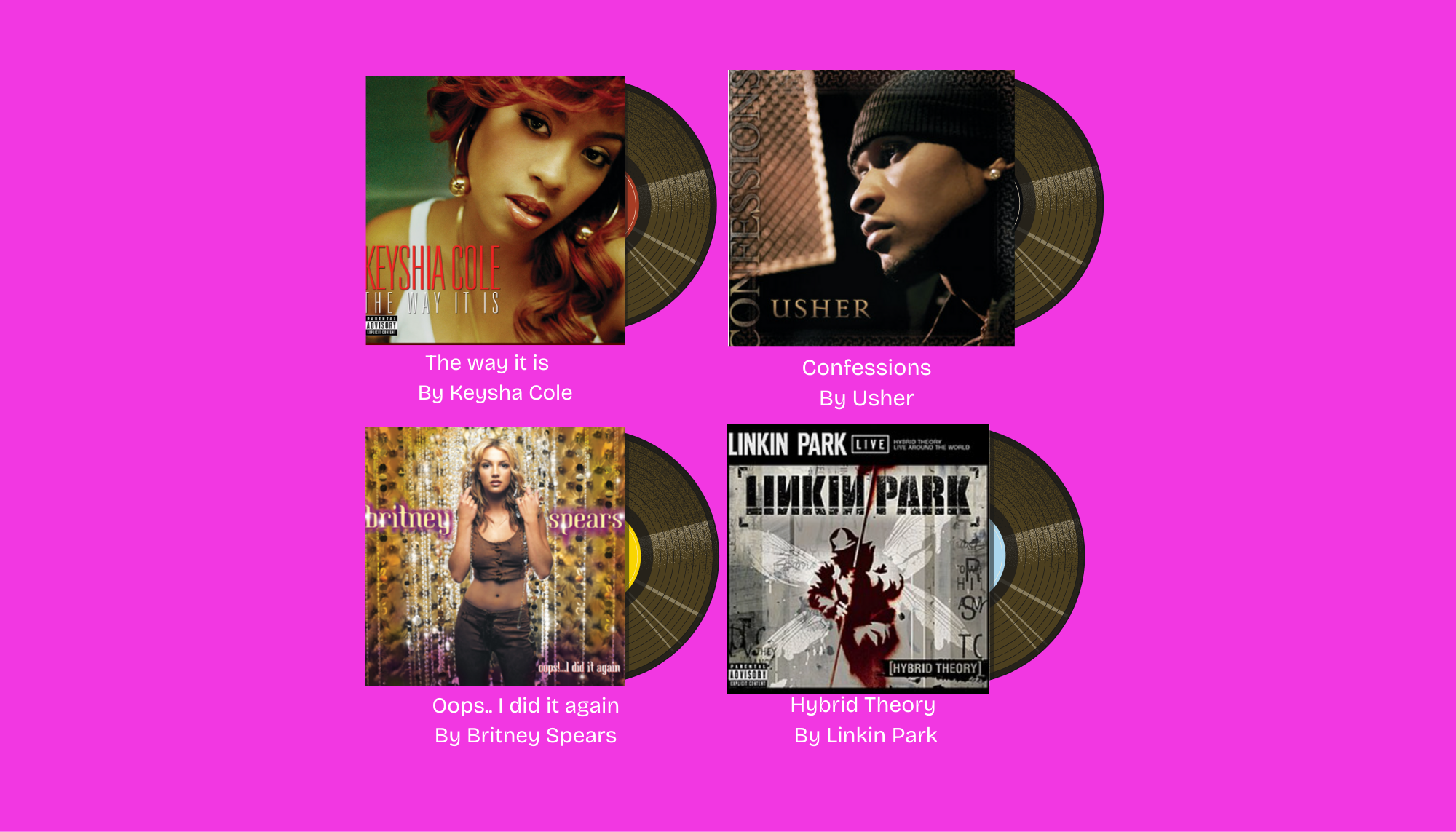

The 2000s era was the start of the twenty-first century and a new millennium. The early years were shaped by global shifts in politics, economics, and technology. The era was crucial because the internet and social media transformed communication and culture. Major events like the September 11 attacks in America, the Iraq War, and the 2008 financial crisis left lasting marks on society. Naturally, these shifts rippled through the music industry as well.
The 2000s were crucial for music’s transition from physical media to digital and streaming technology. Before Spotify and YouTube on phones, people relied on Napster, Limewire, and MP3 players for their music, and earlier they used CDs and watched MTV’s TRL. Early social media platforms also revolutionized how people shared music, and it paved the way for today’s streaming.
“I really like listening to music from this era because there’s a wide variety of genres, and a lot of the songs actually have deeper and more personal meanings behind them,” junior Lauren Dowdy said.
There was no genre that defined the decade more than hip-hop. Hip-hop was extremely popular in the 2000s and was even politically influenced, with artists using the genre to convey powerful social messages.
“Where Is The Love,” by the Black Eyed Peas, is a prime example of a song that had a message regarding the state of the world at the time. The song was released after the 9/11 attacks and tackled issues such as systemic racism, terrorism, war, and gang violence while conveying a core message that unity is necessary to create positive change in the world.
Beyond hip-hop, genres such as R&B and pop dominated the charts with artists like Britney Spears, Beyoncé, Usher, Chris Brown, Justin Timberlake, Rihanna, and Ne-Yo. Rock was also huge during the decade, with many subgenres like alternative rock and emo. Popular rock bands included Green Day, Coldplay, and Linkin Park.
Auto-Tune, dance-pop beats, and emotional lyrics became defining features of 2000s hits, reflecting both escapism and real-world struggles.
“2000s music inspired so many artists today, not only by the beats, but by the overall sound and the style,” sophomore Leya Brooks said. “The music had a huge impact on society today, and I really like it because it’s my chill, calm music.”
From fun and whimsical songs, to songs with deep meaning, the 2000s left a mark that continues to shape today’s artists and their music.
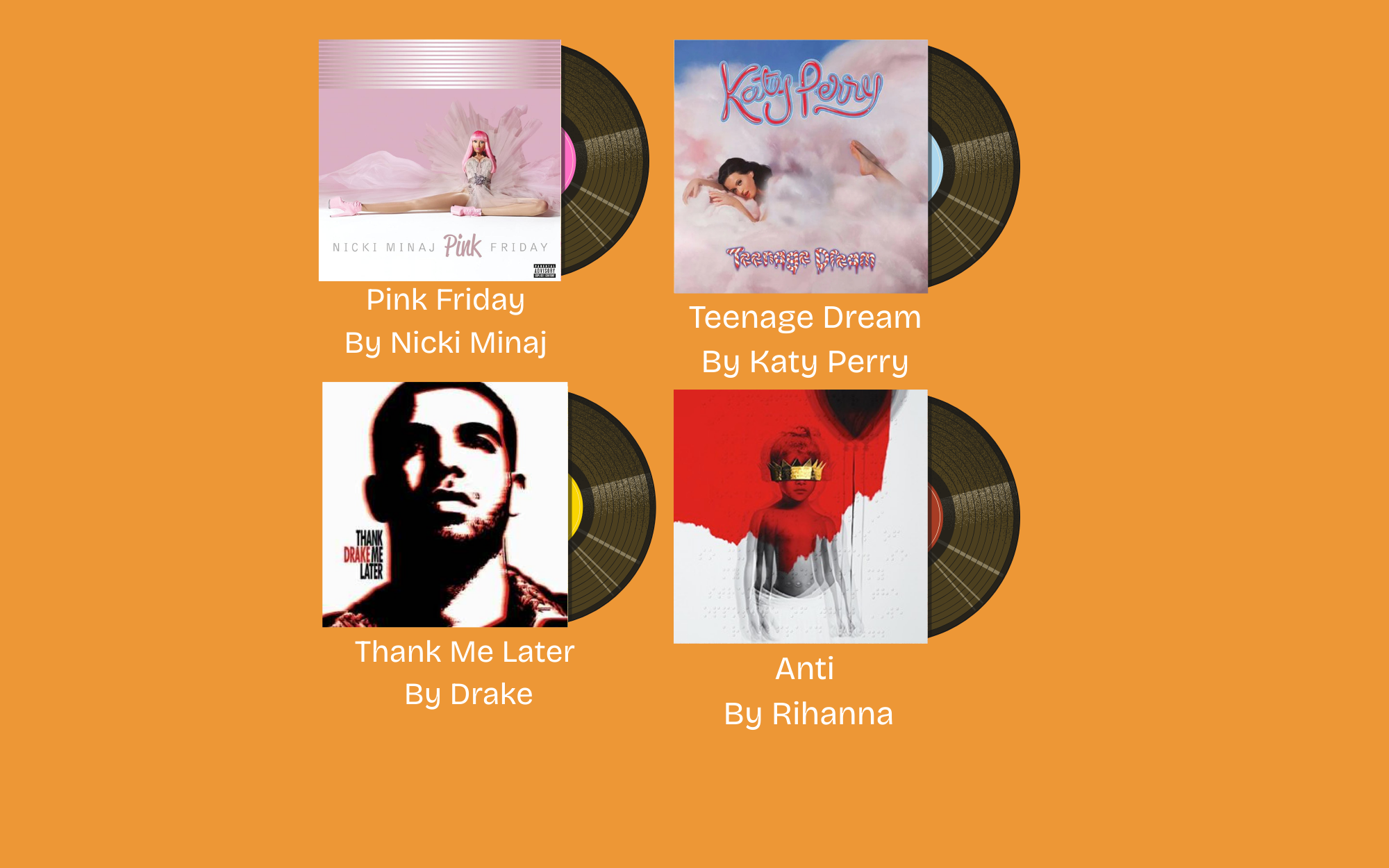

The 2010s were a transformative decade for music. The rise of streaming services like Spotify, Apple Music, and YouTube, revolutionized the music industry, making music more accessible than ever and allowing music listeners to be released from the constraints of buying individual CDs.
“I’d say my favorite artist from the 2010s decade is Bruno Mars,” sophomore Adrian Bracamontes said.
The 2010s were a decade that was constantly evolving within itself. The decade began with a complete pop overtake. Albums like “Teenage Dream” by Katy Perry, “Pink Friday” by Nicki Minaj, and “Doo-Wops & Hooligans” by Bruno Mars dominated Billboard charts, contained songs that hit number one on multiple charts, and broke records. During this era of pop, many artists cemented their roles and rose in fame. Lady Gaga rose from simply a pop star to a global superstar with her musical releases in the 2010s. The decade also made room for some of the generation’s biggest artists like Taylor Swift, Justin Bieber, and Adele, to begin their musical reign.
“I think Drake is one of the most influential rappers of our time,” senior Sophia Roberts said.
Throughout the mid 2010s hip-pop and trap music began its domination with emerging artists such as Drake who began to blend R&B and rap to create his own niche genre of music that would transform the music industry and legendary and revolutionary artists Kendrick Lamar and J. Cole, who introduced modern conscious hip-hop, and relayed that music with a meaning could make an impact on the world and youth. These legends catapulted hip-hop even further into mainstream media, making space for new artists like Cardi B, Future, and Migos. Cardi B’s 2017 release of “Bodak Yellow” turned 13x Platinum in the U.S. and became the most-certified female rap song in U.S. history.
“Some of the artists I listen to from the 2010s are Rihanna, Adele, Beyonce, and Britney Spears,” senior Shaylynn Beltran said.
As the 2010s neared its end, many styles appeared in the mainstream media. Country song, Lil Nas X’s “Old Town Road” was the literal song of the summer for 2019. “Despacito (remix)” by Luis Fonsi and Daddy Yankee ft. Justin Bieber was one of the biggest hits of the 2010s, and it exemplified another trend: Latin music’s move into the mainstream. Then the global phenomenon of K-pop music exploded, as groups such as BTS, BLACKPINK, and EXO took over social media, introducing millions of fans to Korean pop music and consequently causing it to rise on the charts. BTS, specifically, became one of the decade’s biggest sensations, breaking records and selling out stadiums worldwide.
The 2010s left an otherworldly and permanent mark on the music industry album releases like “Lemonade” by Beyonce, “Anti” by Rihanna, and “Flower Boy” by Tyler the Creator, and singles like “Rolling in the Deep” by Adele, and “Happy” by Pharrell Williams. The 2010s were a decade that still impacts the world now.
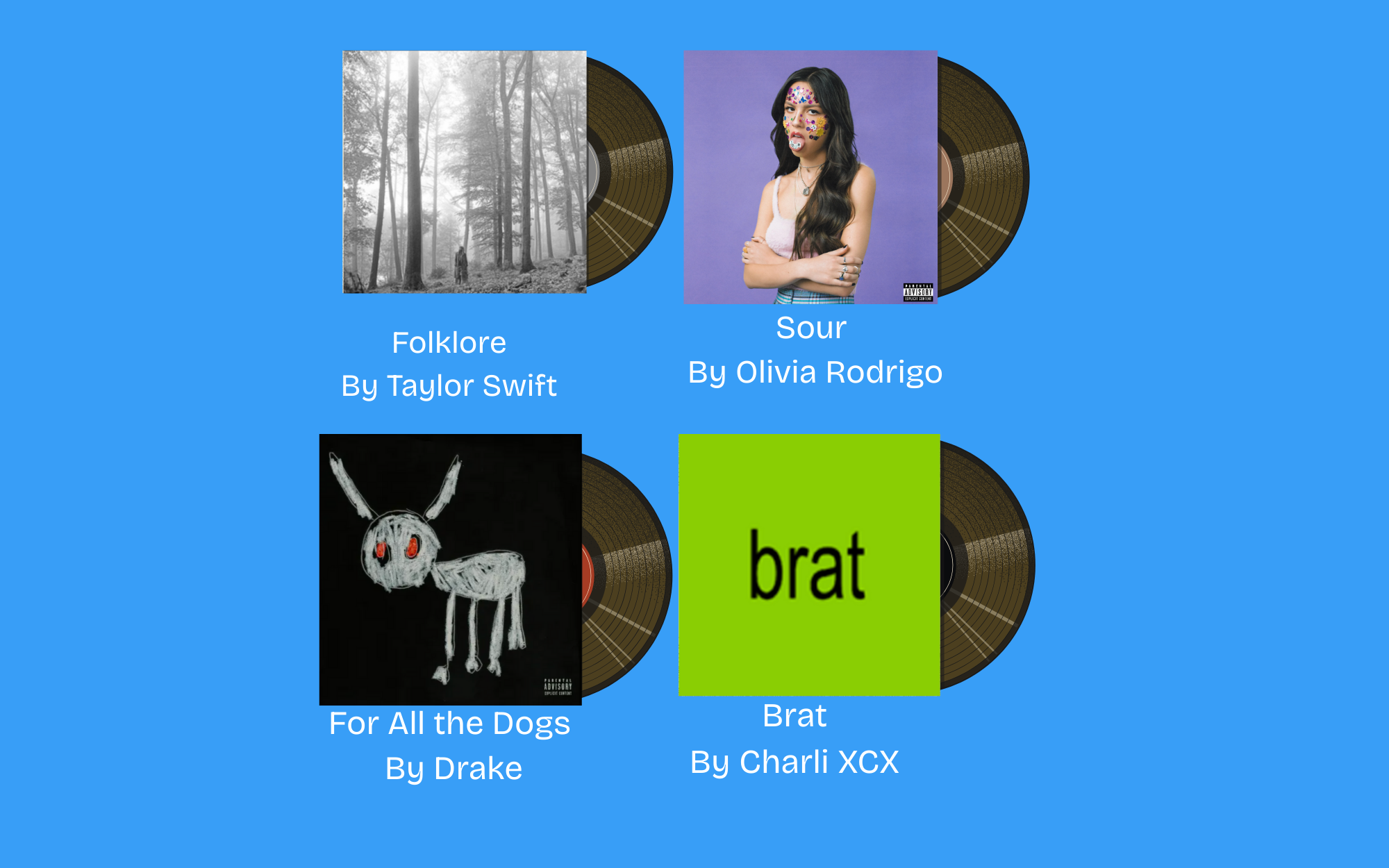

From chart-topping hits to viral TikTok songs, today’s artists are reinventing the meaning of creating and sharing sound in a digital world. With streaming platforms almost becoming a necessity, musicians like Taylor Swift, Drake, Bad Bunny, and SZA are leading a movement in music that combines emotion, innovation, and identity.
Students at RCHS shared their opinions on what they think are the least looked-upon genres in music today.
“Some music just isn’t as popular as they once were,” senior Vanja Rancon said. “Heavy metal and country music are probably the two most overlooked genres of music today.”
Taylor Swift stands at the forefront of that movement. Her decision to re-record her early albums became a statement to everyone, showing her willingness to go the extra mile for complete artistic control and freedom. With “Midnights” and “The Tortured Poets Department,” Swift demonstrated a balance between personal storytelling and staying in line with mainstream pop, elevating her songs with raw emotion, turning them into anthems for all listeners alike.
In the rap scene, Drake has remained a staple for almost two decades. He continues to shape modern rap through his lyrics, professional production, and his ability to set new trends. Albums like “Certified Lover Boy” and “For all the Dogs” showcase his ability to evolve without losing his identity.
Senior Ronny Buzenes gave his thoughts on Drake and the music industry of today.
“Drake continues to be a bright spot in the music industry even past his controversies,” Buzenes said. “He consistently stays at the top of the charts, and it’s because he knows what people want to hear, and his style complements that vision perfectly.”
Bad Bunny’s rise shows just how global pop has become. His ability to fuse reggaeton, Latin trap, and pop not only keeps him on the charts but showcases how his music breaks language and cultural barriers. His success and popularity is evident with him headlining the Super Bowl LX Halftime Show.
SZA has become one the most impactful voices of the decade. Her album “SOS,” released Dec. 9, 2022, set new precedents in the R&B space, reimagining R&B with more emotional transparency, melodic experimentation, and vulnerability that resonates with listeners of all demographics. Her music speaks to self-discovery and resilience, themes that are more critical than ever now after the pandemic.
The music of the 2020s is more than just a sound or a trend, it’s storytelling. It reflects a world that continues to constantly evolve as people connect with one another. From Swift’s mastery of storytelling and the global reach of Bad Bunny, the artists of today continue to establish that music continues to evolve. In an age defined by individuality, the sound of now is one that belongs to everyone.