“Avatar 3: Fire and Ash” was released in United States theaters on Friday, Dec. 19, 2025. The film is a continuation from “Avatar 2: The Way of Water,” where the people of the Earth-like moon, Pandora, are still suffering from the major effects of their previous battle against the humans which they call “sky people.”
Protagonist Jake Sully, played by Sam Worthington, along with the rest of his family, continue to grieve over their son Netayam, played by Jamie Flatters, who died in the second movie. Fire and Ash shows the family’s encounter with a new danger, the Mangkwan clan, or the ash people.
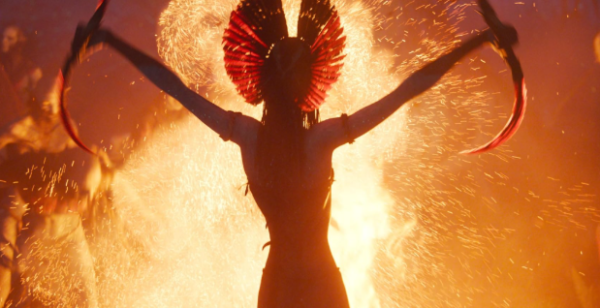
The Mangkwan are known for their hostility towards other Na’vi, taking part in airship raids as well as finding joy in harming others, even people in their own clan. They’re symbols of rebellion from the Na’vi way due to a volcanic eruption destroying their home.
The clan leader, Varang, played by Oona Chaplin, believes that their god, Eywa, hadn’t helped them in their time of suffering, which led to the clan discarding their belief and creating a new life for themselves.
Besides the threat of the Mangkwan, the Na’vi continue to experience the sky people trying to take over. Quaritch, played by Stephen Lang, decides to team up with Varang in order to capture Jake Sully and put an end to him so humans will be able to completely take over Pandora.
Spider, played by Jack Champion, who is a human boy, gains the ability to breathe Pandora’s air after Kiri, played by Sigourney Weaver, performs a spiritual ritual on him after they escape being hunted by the Mangkwan.
Spider’s newfound ability poses a new threat to the Na’vi as the humans find out that they may have a way of living on Pandora after capturing Spider later on in the movie.
Audiences rated “Avatar: Fire and Ash” highly, praising the visual effects and introduction of new elements to the Avatar world. Contrasting this, critics rated the movie slightly above average, noting the repeated story beats present in the second movie, “Avatar: The Way of Water.”
“I think personally out of the other two movies, it’s the weakest,” senior Naomi Clanor said. “You could tell that it’s meant to set up for the next movie.”
Despite the variety of opinions on the movie, critics and fans alike found a consensus in criticizing Cameron’s prioritization of the visuals and shock factor of the movie rather than focusing on the story and characters. Additionally, critics across popular movie-reviewing websites like Rotten Tomatoes and IMDb, found fault in the portrayal of the Mangkwan Clan as insensitive to indigenous populations and their cult-like attributes as “heretical” or “satanic.”
“I would say it’s not satanic, but it’s definitely heretical and not in a bad way,” Clanor said. “I think it’s an important topic to go on, that some people are believers and nonbelievers.”
Similarly, junior Natalie Kruchinsky thought that the film wasn’t the best one released.
“It wasn’t the greatest movie in my opinion. I feel like it could’ve gone more in-depth with some of the different types of Na’vi clans there are,” Kruchinsky said. “They gave a religious perspective of the ash people, but didn’t explain what their culture was about.”
The world of Avatar has always emphasized the importance of nature conservation and cultural celebration, which was a main point of Cameron’s portrayal of “man vs. nature.” The “sky people” heavily reflect the concept of colonization and industrialization of natural environments, especially when their own version of Earth was rendered uninhabitable by their own doing.
“Everyone says they wish that they were living in Pandora, but we are in it already,” Kruchinsky said. “We’re just slowly destroying it.”