AI has skyrocketed since its introduction into the public space and the mainstream media, creating great waves in the everyday human experience. From assisting in daily tasks to innovating new concepts for the creative space, AI has made its presence known in almost every sector, whether perceived as positive or negative.
Recently, marketers have employed AI in advertising. Instead of hiring graphic designers or animators, companies are inputting their prompts into generators. One such ad viewers have identified as AI is the 2025 Coca-Cola Christmas ad.
However, in advertisment, the problem with AI does not stop with big companies. Since AI image and video websites are available online for everybody to use, anyone can easily generate pictures for their ads. AI has already made its way onto eBay listings, increasing distrust in second-hand items bought on eBay.
While eBay sells real items, AI advertisements are prevalent amongst scam products. On Facebook Marketplace and Etsy, especially, some sellers have started using AI to create pictures of fake listings.
According to a Built In article, it also puts many people out of jobs. Previously, commercials all depended on actors, voice actors, or animators to make a company’s vision come to life. AI, on the other hand, takes away the need for anybody but the producer.
“It’s sloppy, and it doesn’t look as good as ads made with real people do,” sophomore Makayla Parchment said.
Many people argue that AI advertisements lack warmth. Although AI is rapidly evolving and it seems as if its products are being more human-like each day, it still hasn’t been able to completely replicate the authenticity of real people. More often than not, AI commercials come off as unnatural and push people away from the company’s products.
Since 2023, AI has slowly been integrated into commercials. However, the first completely AI video commercial, which was made for betting company Kalshi, was shown during the NBA Finals, with 20 million people seeing it. It was made up of short clips showing people in different, strange situations, such as a bride on a golf cart driving away from police and a man sitting in a bath of eggs. The thirty-second ad was made using Google’s Veo 3 and featured more than 40 AI-generated people. Kalshi claimed it cost under $2,000 to make, which is a significantly lower cost than human-made ads with the same features.
However, Kalshi’s commercial came off as unsettling to many viewers. The ad was noticeably AI, both the voices and images looked generated and robotic.
“I thought it was kind of funny because of some of the things people said, but overall [it was] a waste since people would see its AI and then not pay attention, so it wouldn’t be a good way to promote Kalshi,” sophomore Ava Verlich said.
P.J. Accetturo, or P.J. Ace, calls himself an “AI Filmmaker” and has made various other ads for Kalshi. One of them was slightly more organized than the NBA Finals ad. Instead of people being asked bizarre questions, this one focused on historical events, including Paul Revere’s 1775 midnight ride warning Massachusetts about the British.
In December of 2025, McDonald’s Netherlands pushed out a fully AI Christmas Ad with music parodying “It’s the Most Wonderful Time of the Year,” instead calling it the most terrible time of the year. On Dec. 9, 2025, just three days after it was released, McDonald’s pulled the ad after facing backlash from social media, mostly on X and YouTube.
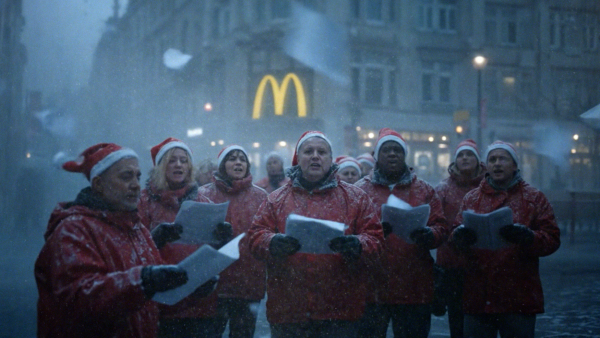
McDonald’s Netherlands’ ad failed on numerous accounts, and one of them was the cynical approach they took to Christmas. Typically, Christmas commercials are emotional and tug on viewers’ heartstrings. McDonald’s Netherlands decided to frame Christmas as a messy, problem-creating disaster. They wouldn’t be the first to depict Christmas this way. In 2020, Plenty UK, the tissue brand, released an ad for their ‘Merry Xmess’ campaign. The ad’s protagonist has bad luck all around: getting a nosebleed, being thrown up on, and unknowingly touching dog pee.
But the key difference between McDonald’s Netherlands and Plenty UK’s ads is their resolutions. Although showcasing a family’s many mishaps in preparation for Christmas, Plenty UK’s ad still focused on the family celebrating together, while McDonald’s Netherlands’ ad ends with someone choosing to celebrate Christmas in McDonald’s, away from their family and friends. It made viewers wonder: Why would McDonald’s choose to use AI to execute an already risky idea? Why not hire real actors to at least provide a human effect?
So far, McDonald’s Netherlands and most other AI ads released by different companies look completely unrealistic. AI’s progression so far has been rapid and provides many benefits in numerous spaces, but image and video-wise, many times the products come out looking slightly soulless and incoherent.
AI videos have distinctive characteristics that make it hard for viewers to even try to imagine them as real, such as stiff facial movements, unnecessarily smooth objects, and an almost cartoonish look to animals and people. Coca-Cola’s Christmas ad, McDonald’s Netherlands ad, and Kalshi’s ads all share these features and have all faced criticism. As AI spreads in advertisement spaces, viewers have begun to completely ignore the message and instead focus on the weird-looking parts of the ads.
In a 2023 Nature research article written by C. Blaine Horton Jr, Michael W. White, and Sheena S. Iyengar, they found that even if an art remained the same, the response to it became more negative with the participants who believed it was made by AI, whereas the human-produced art was seen as more creative.
But there are some companies pushing back. During the summer of 2025, Polaroid launched their ‘OOH’ campaign against AI, where they placed billboards and posters next to airports, streets, and technology stores such as Apple in NYC and London. Their campaign encouraged people to put down their phones and instead connect with the real world.
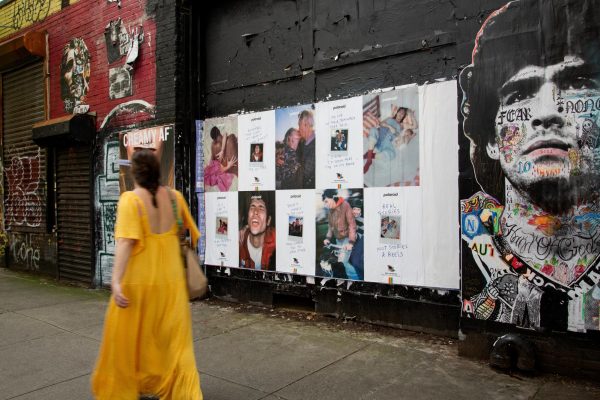
Many other companies stand with Polaroid, two notable ones being Cadbury with its 2024 ‘Make AI Mediocre Again’ campaign and Dove’s 2024 ‘Campaign for Real Beauty.’
As AI becomes more prevalent online, it’s hard to imagine a world where companies have learned from backlash and stopped generating AI advertisements. It isn’t completely harmful, but there should be transparency about its usage. AI, being a noticeably cheap and quick outlet for companies, will only add more value to human-made advertisements. Instead of making completely AI commercials, from scripts to generation, companies should try to have a good balance. AI can be good for marketing, but not when it’s used at the expense and disrespect of human creativity.