

Is it a bird? Is it a plane? It’s my student!
Before this year’s homecoming football game, U.S. Government and Sociology teacher Mr. James Longo’s student, senior Rick Curiel, told him to keep an eye on the sky as he worked as a spotter for the game. What Longo didn’t expect was to actually see his student flying a plane back and forth over the Cougar Stadium that night.
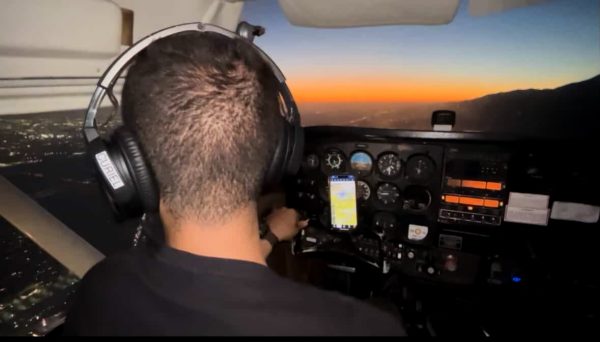
“I had known about it, so I suspected it was him. I think it’s really cool to have your pilot’s license as a high school student. So, I was kinda proud, seeing him up there flying his plane,” Longo said.
After receiving permission to fly in the Ontario airspace above the school, Curiel flew a plane over the football field while also getting footage for the RCHS TV Bulletin.
“Essentially, I just kind of felt like flying that day. I had the plane and was like, ‘It’s gonna be a really good idea,'” Curiel said.
To some, it may be shocking to hear of a student flying a plane over the school, but surprisingly, some aviators walk throughout the Rancho Cucamonga High School campus. Legally, high school students can pilot an aircraft if certain conditions are met.
According to the Federal Aviation Administration, to fly alone, a student pilot certification is needed, with eligibility requirements being that the flyer must be at least 16 years of age and can read, speak, and understand English.
Having met these requirements, two student pilots and an alumn shared their experiences with flying.
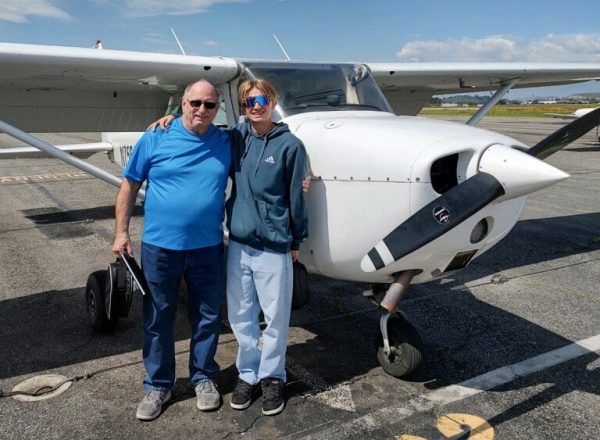
Senior Rick Curiel
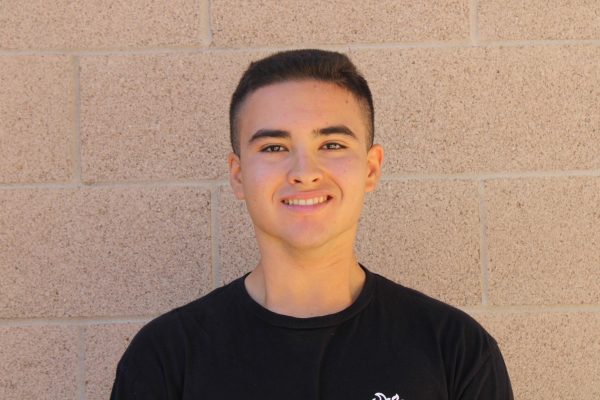
“That first flight you take, it’s really scary, not scary in the sense you don’t know what you’re doing, but it’s a whole new aspect of life, and when you get over that hump, it’s completely fun,” Curiel said.
Surrounded by flying his whole life and his dad being a pilot, Curiel’s love for all aspects of aviation sparked his passion for flying.
“I love the people, I love the aircraft, I love the maintenance, the logistics. Every part of it draws me in and feels like home to me,” Curiel said.
With this growing passion, Curiel decided to follow in his father’s footsteps. This year, Curiel took his first flight on Jan. 18, and later, after working hard for months, earned his pilot’s license. As of now, he is continuing his piloting journey, typically every two weeks, in hopes of becoming a more proficient pilot.
In the future, Curiel said he wants to serve in the United States Air Force and fly fighter aircraft, and then work as a commercial pilot. He plans to pursue this after graduation by enrolling in the Air Force Academy.
Junior Everett Cornett
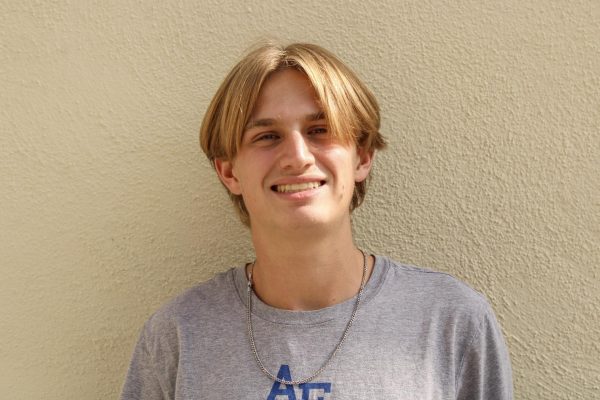
For the past two years, junior Everett Cornett has worked toward earning his pilot’s license.
“I’ve always loved flying ever since I was a little kid. I wanted to be an astronaut, but then I went to this aviation camp, and I realized I really wanted to be a fighter pilot,” Cornett said.
With hopes to also enlist in the United States Air Force and join the Air Force Academy, Cornett has taken on flying.
“I don’t have a licence, but I’m working on it. Time is a big requirement,” Cornett said.
Cornett spends a significant amount of time flying whenever he can, and he practices on his at-home flight simulator, preparing for his future career.
When asked about one of his favorite times flying, he recalled finally fulfilling his desire to take his grandfather, entering zero gravity during the flight. Putting in the hours, he is working hard for his dream.
Alumn Noel Cruz
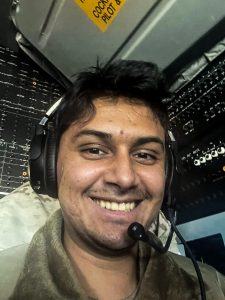
Currently a co-pilot in training for a KC-46, Class of 2023 RCHS graduate Noel Cruz took steps to become a pilot while still in high school.
“[T]he first time I flew a plane was at a Public Air Force Event. It was a biplane (which means it had two stacks of wings) and I fell in love with it! Then, after that, I try to find ways to do it again,” Cruz said.
Following graduation, Cruz joined the Air Force at 17, serving for two years, and later obtained his four-year degree online. He was then commissioned as an officer and worked to pass the AQQT, Aircraft Qualification exam, to be selected for aircraft training.
His love, fueled by the freedom that flying gives him, Cruz continues what he started in high school. Although it was just a taste of what was to come, it was where he started.
“They made it seem so easy in high school! Then you become a pilot, and there’s a lot of studying, but once you pass that and actually start flying the plane, it’s pretty exciting,” Cruz said.
Recommending Flying
Overall, all three pilots recommended interested students to pursue flying, each with their own set of advice. Curiel encouraged others to start their journey by joining a flight school and continuing to make connections. Cornett suggested thinking of flying as a future investment, similar to Cruz, seeing piloting as a lucrative career. Finally, Cruz introduced another aspect to look at: the amount of time and resources a student can give to flying.
“Just do your research and understand what you’re getting yourself into. My instructor always said, ‘90% of the job is studying, 10% is flying, but once you can fly, you know you’ve made it!’” Cruz said.
Beyond meeting the requirements to fly, the next step many pilots take is getting their piloting licence, so it is necessary to research (certification, testing, and training). There must be consideration of the correct type of piloting license and for what specific aircraft. Many different aspects go into what it takes to be a pilot.
Despite varying approaches to flying, each path slightly different, in the end, Cruz, Curiel, and Cornett suggested students should just go for it, go for the first flight.
“It’s a completely unknown aspect, but just take that first leap,” Curiel said.