In October 2025, coral reefs crossed a tipping point of no return, according to a report by 160 scientists. Because of climate change, water temperatures cannot sustain the coral reefs, meaning entire ecosystems will be desolate.
In Florida, two species of coral, the elkhorn and the staghorn, have already been marked as extinct. The report states that global temperatures have crossed the threshold and are rapidly and irreversibly declining.
“The coral reef has two roles in terms of the ecosystem. First, it’s a food source,” AP and Honors Biology teacher Mr. Michael Griffone said. “Second, the corals produce the reef itself, which creates a lot of hiding places for fish.”
These ecosystems are essential to many organisms for life and other ecological purposes. According to the Environmental Protection Agency, around 25% of all marine life, including more than 4,000 fish species, rely on coral reefs at some point in their lives. Coral reefs are diverse and rely heavily on the interactions with each other and their physical environment. They provide shelter for marine life, similar to sea anemones, which they are closely related to.
“Coral reefs are crucial to aquatic ecosystems because they provide essential habitats for feeding, spawning, and refuge,” environmental science teacher Ms. Windy Brown said.
To many people, coral reefs have cultural value. They are visually pleasing to the surrounding environment and contain cultural, religious, and spiritual values, services, practices, and traditions for coastal people in tropical environments. They are home to multiple sea life organisms, providing shelter from natural disasters, and nourishment.
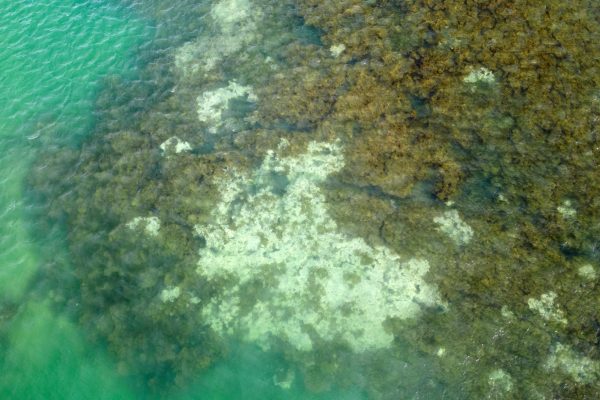
When a coral reef dies, it’s known as bleaching. This is when the corals lose their bright colors and turn white or dull. Coral is bright in the first place due to an algae called zooxanthellae. When temperatures rise, it stresses out the algae, and the algae expels itself, leading to the color fading away known as “bleaching”.
The destruction of coral reefs is not only due to climate change, but also to human activities such as overfishing. The overfishing of herbivore fish can lead to an increase in algae. A higher algae population suffocates the reefs.
Destructive fishing methods also play a role in the decline of coral reefs. Dynamite and cyanide fishing methods cause permanent damage to the ecosystem around them, negatively affecting not only the coral but also the local fisheries that depend on the diverse marine life that reefs maintain.
The Reef-World Foundation stated that if coral reefs went extinct, about 25% of marine life would lose their habitat. The fishing industry depends highly on coral reef ecosystems meaning hundreds of people would lose their source of income and food.
“Fish account for about 1/5 of the world’s protein consumption. Many coastal communities also have economies that rely on fishing. As coral reefs die, people will lose access to food and jobs,” Brown said.
Sophomore Nyame Peprah visited a coral reef for the first time in June of 2025. Specifically, she and her family visited the Red Sea in Egypt.
“I don’t know if they [coral reefs] were dying, but they were a little darker in color. Then, there was just so much life around it, and it was so beautiful. They were a little dull, kinda brown. Like they were very colorful but on a greyer spectrum,” Peprah said.
Brown reefs are signs of the later stages of decay and algae coverage.
The Reef-World Foundation added that around 50-80% of oxygen is produced from the ocean. Most of it comes from plankton and other bacteria that can photosynthesize. This oxygen is consumed by land and marine life. To keep a sustainable and clean atmosphere, the ocean also needs to be clean.
While it seems like saving the coral reefs might be out of our control, there are ways to protect them by making small changes. When visiting coral reefs, it is important to avoid touching the coral, wearing sunscreen with harmful chemicals, and placing an anchor near the reefs.
“To prevent more coral bleaching, we need to reduce our ecological footprint. That will cut the carbon dioxide emissions that cause ocean acidification and climate change,” said Brown.
The EPA adds that when going about daily life, it’s important to recycle and dispose of trash properly. Carpooling, using electric cars, or walking also makes a huge impact since carbon emissions can contribute to higher ocean acidification, leading to a higher ocean temperature.
Brooklyn Helper, a senior at RCHS, has thought about becoming a marine biologist or a veterinarian for marine animals. She said she has had a love for the ocean since she was little. Protecting the ocean is critical to her because it’s home to so many creatures that need to be protected.
“I believe everyone can make a difference in trying to stop massive reefs from dying, not only by advocating for them and the ocean in general, but by lessening the amount of pollution that goes into our oceans,” Helper said. “This can be done simply by recycling or buying products that can be decomposed. If everyone did this, our underwater ecosystems would be so much healthier.”