For more than 135 years, the Rose Parade has been a Californian tradition, taking place annually on New Year’s Day. The parade is in conjunction with the college football game (known as the Rose Bowl) in Pasadena. The parade is known for its elaborate floats decorated with flowers, beans, and other flora.
The Rose Parade first started in 1890 by Charles Fredrick Holder and members of the Valley Hunt Club. Their goal was to showcase the abundance of flowers in the middle of winter by sponsoring the first Tournament of Roses.
According to the Tournament of Roses official website, during a meeting before the first parade, Holder discussed how people in New York were buried in snow, but California told a different story.
“Here our flowers are blooming, and our oranges are about to bear. Let’s hold a festival to tell the world about our paradise,” Holder said in the meeting in the 1800s.
Ten years later, the Tournament of Roses became too much for the Valley Hunt Club, leading them to step down as organizers to be replaced by the newly formed Tournament of Roses Association.
From there, the parade expanded to include marching bands, motorized floats, and live performances.
To this day, the Tournament of Roses selects marching bands to perform at the parade. Rancho Cucamonga High School senior and mellophone player Bruce Gutierrez was one of the 162 high school students to perform in the parade.
“It’s a collaboration thing between the college. So whichever spots the college couldn’t fill, high schoolers were allowed to fill,” Gutierrez said.
To audition for the spot, Gutierrez performed a recorded piece that would best showcase his talents. The theme for the 2026 Rose Parade was “Magic in Teamwork.” As such, the band played “We’re all in this Together” from High School Musical, “A Little Hope from my Friends” by the Beetles, and “It’s all coming up Roses” by Ethel Merman.
“Starting like two months prior, we had rehearsals every Sunday for like five hours. That would be mostly music rehearsals. That would be until we got into December, when we got mini training camps,” Gutierrez said.
Gutierrez said he was sad he hadn’t applied before, as he was excited that he was able to be around so many talented musicians. Unfortunately, the opportunity is only allowed for high school students, and he will graduate this year, but he was happy he got to do it at least once.
“I mean, it kind of sucks because the only way I’d be able to do it again is if I went to Pasadena College,” Gutierrez said. “Overall, it was really cool though, because on my first day, I realized that like all of them were prestigious players. They were the best in California, and it is like a step up from our program.”
From the volunteers who make the floats to the band members who march in the parade, making music along the way, behind the scenes, many things have to come together to make this parade a reality.
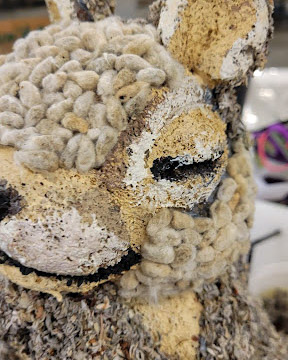
Every year, volunteers put in roughly 80,000 hours to make sure that the floats get done. While many would imagine that working is just putting on flowers, there are a variety of jobs that need to get done, from gluing pieces together, to cutting flowers, to creating the animals and objects seen on the floats.
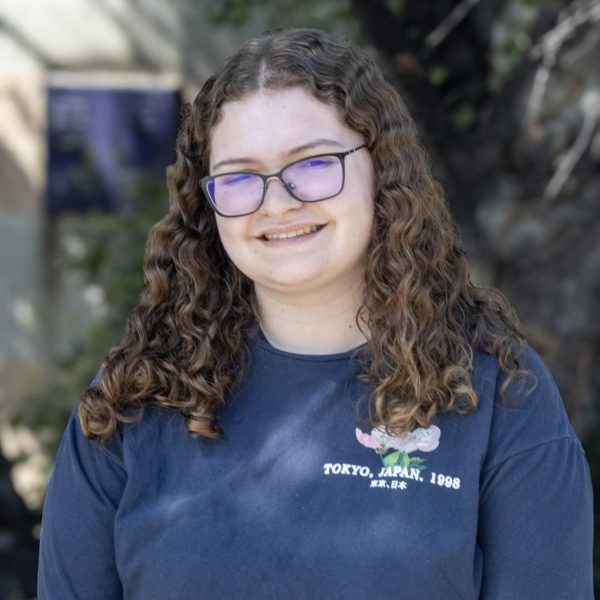
One such volunteer is RCHS senior Kayleah Schmitz. Schmitz has been volunteering with her Girl Scout troop for several years.
“I’ve been in Girl Scouts for 13 years,” Schmitz said. “And this is my troop’s last harrah, so might as well do it one last time as a troop.”
There are several ways to get involved with volunteering, but many, including Schmitz, volunteer with a variety of Tournament of Roses-approved commercial float builders. These companies make many of the floats. Girl Scouts works with Fiesta Productions.
The companies typically need volunteers to be at least 12 years old. When the young volunteers start, they won’t typically be putting on flowers. Most of the time, younger volunteers will work about two weeks before New Year’s, preparing flowers by cutting them and putting them in jars, or removing petals from flowers. As volunteers get older, they will do more with glue and possibly put flowers on the floats.
Schmitz’s task was two days before New Year’s, but she was assigned to sort separated colored pieces of rice to make sure that the rice was all white to put on the float. Her troop lamented having to separate the grains of sand for eight hours, the standard shift for volunteers.
It was all worth it in the end for both Schmitz and Gutierrez, as they both want to participate in the Rose Parade again in the future, with Gutierrez inspiring three other students to participate next year.